The Background
Throughout my career, from building at high-growth startups to securing global enterprises, I have seen the same pattern play out. Whether a company is preparing for a Series B fundraise or scrambling to unblock a massive enterprise deal, leadership eventually hits a technical compliance wall. While administrative tasks like background checks are easily handled, proving the secure state of your cloud infrastructure for frameworks like SOC 2 or ISO 27001 becomes a massive bottleneck. To solve the problem quickly, executives enthusiastically approve a five-to-six-figure invoice for a legacy Governance, Risk, and Compliance platform. They sign the contract and assume the burden is handled. Often, they even pay expensive ongoing retainer fees to implementation consultants recommended by the vendor.
However, the outcome is always the same because those consultants simply act as project managers, and the actual technical implementation is handed right back to the internal engineering team to execute. In reality, leadership just signed the company up for a massive compliance tax on top of the initial software invoice. In my last article, I detailed how I transitioned to a modular private agent architecture to automate workflows, and today I want to explore the massive enterprise problem I am applying that architecture to solve.
The High-Stakes Problem
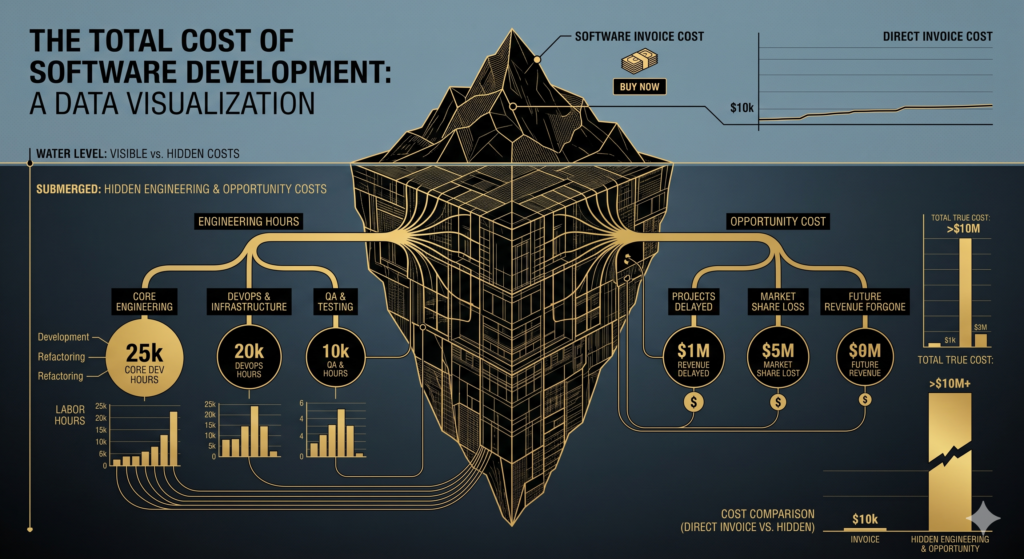
The real cost of compliance is never the software subscription, but rather the massive opportunity cost of the engineering talent. When leadership buys an off-the-shelf GRC solution, they inadvertently sign up senior cloud architects and lead developers to stop building the core product so they can wire up APIs, patch failing controls, and take manual screenshots for an external auditor. You are paying a premium for automated compliance, but you have taken at least two high-paying staff members who cost upwards of $300,000 a year combined and turned them into permanent compliance plumbers.
Technology rot compounds this issue because cloud infrastructure is never static. As cloud provider APIs deprecate, Infrastructure as Code schemas change, and security groups inevitably drift, the integrations powering the vendor’s platform continuously break. This decay demands endless human intervention, forcing an internal engineer to log back in and fix the plumbing every time a cloud provider updates a service. This maintenance burden is further amplified by the hidden cost of vendor management, requiring your senior engineers to sit through weekly or monthly sync calls that drain productive coding hours. When the platform inevitably breaks, your team is handed over to a non-technical account manager, sparking endless email chains that ultimately culminate in a rushed ten-minute support call with a pre-sales architect who is actively boarding a commercial flight simply because the actual R&D engineers are heavily insulated and entirely unavailable to assist you.
The Pivot
To escape this cycle of vendor dependence, I evaluated the market and realized the industry is trying to solve a deeply technical execution problem with administrative tools. Strictly speaking, compliance is fundamentally a regulatory and risk management function. However, achieving compliance in a modern cloud environment is absolutely an engineering discipline. Traditional GRC platforms are built for auditors, treating security as an administrative afterthought completed via manual checklists. Because executives are the ones buying these tools, the industry builds massive, bloated platforms tailored to administrative oversight rather than technical execution.
We need to stop buying SaaS middlemen and completely reframe how we view the problem. We must translate complex regulatory frameworks into concrete technical specifications, treating them as core system requirements rather than paperwork exercises. By adopting a true Compliance as Code model, the overarching goal is to radically reduce the long-term compliance tax by building native evidence collectors that are resilient, containerized, and owned entirely by the organization.
The Build
Rather than waiting for the industry to course-correct, I started writing the code to execute this vision. I am currently developing the Jula, which is an open-source Go CLI tool. Instead of tackling all five pillars of GRC, it ruthlessly ignores the administrative fluff and strictly attacks the two pillars that actually block revenue: IT Risk and Audit Management. The remaining pillars, such as Policy Management or Enterprise Risk, are essentially just document storage and task tracking problems that can be easily handled by your existing workspace tools without requiring an expensive overlapping subscription.
By focusing strictly on the technical extraction, Jula pulls state directly from cloud APIs and runs locally in your environment, ensuring you own the code and the cryptographic evidence while remaining immune to SaaS price hikes. To completely mitigate the issue of technology rot, we can combine this approach with the autonomous AI swarms I wrote about previously. If fighting infrastructure rot simply requires updating deprecated APIs and refactoring code, we no longer need humans to do it. We can deploy local AI agents running on nightly cron jobs to automatically analyze code, update integrations, and push pull requests while we sleep.

The Reality Check
This architecture is not just a theoretical concept. I built an earlier, less advanced iteration of this pipeline in the past. While it successfully reduced our compliance costs, we were still fundamentally tethered to a legacy SaaS platform. The Jula is the natural evolution of that system, designed to break free from the vendor trap entirely.
I am building this in the open on GitHub because I know that no single tool will scale perfectly for every unique environment. Every organization has its own quirks, whether it is a legacy process, a specific technology constraint, or a unique internal culture. You will always need talented professionals with the technical depth and soft skills required to navigate these quirks and interface with auditors and engineering teams. However, by building the pipeline yourself rather than buying a generic product, you can automate away the toil and allow your team to focus on shipping revenue.
The Bottom Line
Compliance will never require zero manual intervention, but engineering your own Compliance as Code pipeline is the only way to sustainably reduce your long-term compliance tax.
Ready to build this?
If you are an engineer tired of paying the compliance tax or a technical leader who wants to figure out a better way to engineer your security program, you do not have to use my tool, but I would love to hear how you are handling this. Feel free to reach out to me directly on LinkedIn, or book a reality-check call with me here to chat about your security architecture.